
Secret Wine Confession:
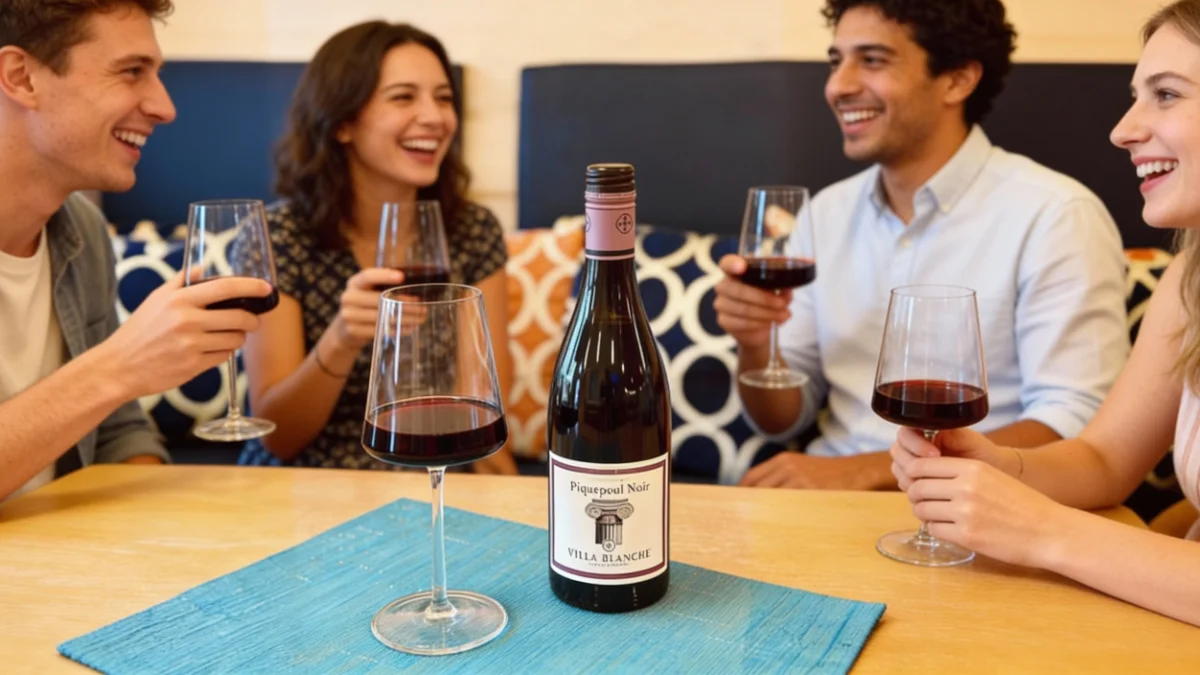
Piquepoul Noir
We need to admit something.
We’ve always loved chilled red wine. Probably decades of drinking Greek red, where chilling it to somewhere near absolute zero was the only way to make it remotely civilised.
(And yes, we also love a chilled sparkling red, but that’s another confession entirely.)
Enter Piquepoul Noir.
This is a light red that genuinely wants to be chilled. Fresh, softly fruity and easy-going, Piquepoul Noir is a joy to drink and refreshingly uncomplicated.
The real surprise is what happens as it warms in the glass. Instead of becoming harsh or awkward, it relaxes. The fruit deepens, the edges soften, and it just keeps behaving itself. Quite the opposite of some white wines, which can get a bit sharp once they lose their chill.
Piquepoul Noir works beautifully with food. It’s fantastic alongside a hearty stew, excellent with cheese, divine with a bagel, and just as happy doing its own thing by the glass.
And, if we’re being completely honest, it’s also rather good with a sofa, a blanket, and Strictly Come Dancing!
So. No rules. No wine lectures.
Just a quietly brilliant red that happens to like the cold.
We probably shouldn’t be telling everyone about Piquepoul Noir.
But here we are.
Wine Facts:
Villa Blanche Piquepoul Noir
Everything you need to know about this delicious red wine from Calmel & Joseph.
Country
Southern France, Languedoc
Grapes
100% Piquepoul Noir
Serve
Lightly chilled, or
absolutely chilled!
Ideal by the glass
Alcohol
12.5%
Colour
Pale ruby
Tannins
Low
Body
Light and elegant
Aroma
Red cherry, raspberry, subtle spice
Flavour
Fresh red fruit, soft tannins, lively and fresh acidity
Did you know?
Piquepoul Noir is the lesser-known sibling of Piquepoul Blanc, the grape more commonly associated with crisp southern French white wines. The red version is rare, naturally light in tannin and particularly well suited to being served chilled, which is exactly why it works so well in a café setting.
So yes, Piquepoul Noir is served chilled. Yes, we’re very happy about that. And yes, once you’ve tried it, you might wonder why more red wines don’t behave this well.