
Better Choices or Better Stories?
What oat milk reveals about substitution, consumer culture, and the stories we tell ourselves about progress
Better choices or better stories? That is the question that sits underneath the oat milk conversation, and once you start looking at it closely, it becomes difficult not to see the wider pattern. What begins as a question about what we pour into a coffee or over our cereal quickly turns into a question about modern life, consumer culture, and the stories we tell ourselves about progress.
Because that is what so much of this comes down to. Not simply what we consume, but how we justify it. Not just what we buy, but the meaning wrapped around it. Somewhere along the way, many of us stopped asking, “Do I need this at all?” and started asking, “What is the approved alternative?”
That is a very different question.
Better choices or better stories in the age of substitution
Take oat milk. For some people, it serves a practical purpose. Some cannot tolerate dairy. Some simply prefer the taste. Some want to reduce their intake of animal products. Fair enough. But that is not really where the fascination lies. What is interesting is the way oat milk is so often spoken about, as though it exists in some cleaner moral category than the thing it replaces. It is presented as wholesome, ethical, simple, even enlightened. Yet scratch the surface, and it is plainly not a simple product at all. It is farmed, processed, formulated, fortified, packaged, transported, merchandised, and sold back to us as a better answer.
That does not make it evil. But it does make it revealing.
Because the real issue is not oat milk itself. The real issue is how easily substitution gets mistaken for wisdom.
We like to think that swapping one thing for another means we have moved forward. We stop drinking milk, but still want a milk-like drink. We do not step away from the habit, we simply replace it with something that performs the same function while carrying a more flattering story. We reject one system, then neatly step into another. Often more processed, more packaged, more engineered, but better lit morally. The old choice is made to feel clumsy or outdated, the new one cleaner and more self-aware.
Better choices or better stories across modern consumer culture
And that pattern is everywhere.
We see it in food, where a deeply processed alternative can be sold as progress purely because it avoids one now-unfashionable ingredient. We see it in wellness, where supplements, powders, bars and fortified products are sold to people who are too busy, tired, or overwhelmed to do the simple things well. We see it in technology, where convenience is sold as liberation, even when it leaves us more dependent than before. We see it in business, where brands no longer just sell quality or usefulness, they sell moral positioning. Buy this, and you are not just consuming. You are caring. You are evolving. You are part of the right story.
That is why a carton of oat milk can say more about the times than it seems.
It represents a culture that rarely asks for restraint. We are not encouraged to need less. We are encouraged to switch, upgrade, reframe, and continue. If one product begins to feel questionable, another arrives ready to carry the same desire in a more acceptable form. Not less, just different. Not simpler, just rebranded. Not freedom from the machine, just a more attractive place within it.
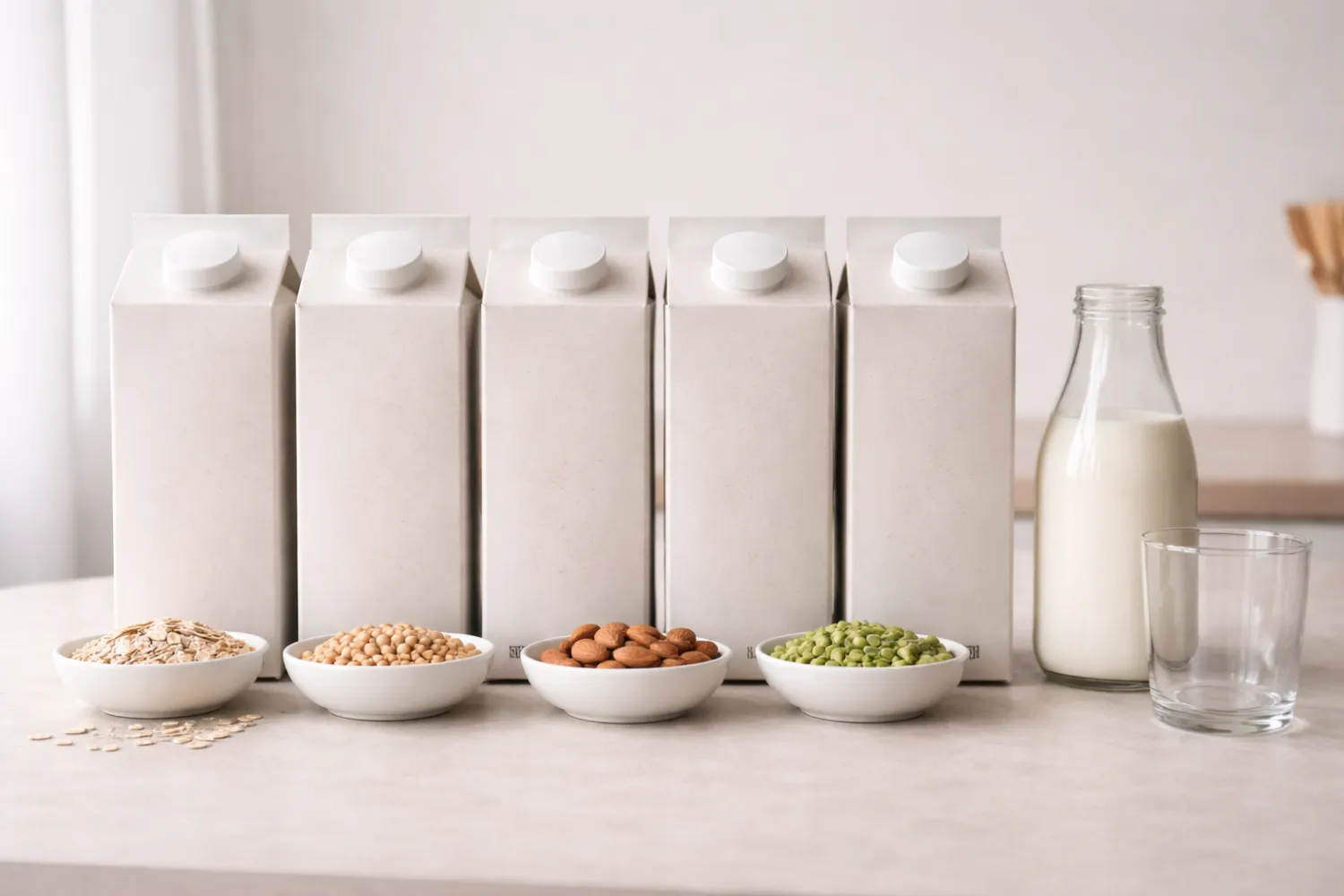
There is something almost comforting in that arrangement. We do not have to examine the habit itself if we can find a substitute that lets us keep it intact. We do not have to rethink our dependence on milk-like products if there is always another version ready to pour, steam, froth, and reassure us. Soya, oat, almond, coconut, pea. The march continues. The details change. The mechanism stays the same.
Are we making better choices or better stories for ourselves?
And this is where the bigger question emerges.
Are we making better choices or better stories?
It is an uncomfortable question because it does not only apply to other people. It applies to all of us. Most people are not foolish. They are busy, overloaded, trying to do the right thing in a world full of noise. They reach for what looks like the sensible option, the kinder option, the healthier option, the responsible option. That is understandable. But stories are powerful. They do not need to be entirely false to be misleading. Often they are most effective when built around a grain of truth. Yes, perhaps one option is marginally better in one respect. But does that mean it deserves the halo it has been given? Does it mean the wider system has been meaningfully improved? Or does it simply mean the new version comes with better language, cleaner design, and a more convenient conscience?
That is the part worth pausing over.
Because once you begin to notice it, you see how often modern life offers us alternatives in place of reflection. We are given substitutes when what we may really need is reconsideration. We are sold choices without being encouraged to examine appetite. We are trained to think in terms of product replacement rather than behavioural change. And so we remain consumers first, only now with the added satisfaction of feeling that our consumption has become ethical, healthy, or progressive.
Better choices or better stories, and the difference between progress and repackaging
But perhaps real progress is not always found in the next version of the same thing.
Perhaps sometimes it lies in asking whether we need so much of it at all.
That is not a puritan argument, nor an anti-modern one. It is simply a question of honesty. There is a difference between improvement and repackaging. There is a difference between reducing dependence and redesigning it. There is a difference between choosing more wisely and being more skilfully persuaded.
Oat milk, then, is not really a villain. It is a symbol. A tidy, everyday symbol of a culture that finds it easier to engineer a replacement than to embrace restraint. Easier to market an alternative than to invite moderation. Easier to sell people a new story than to ask them to live with less.
And that may be the real issue.
Not what is in the carton, but what the carton represents.
A world that no longer says, “perhaps you do not need this.”
Only, “here is a better version.”
Just a thought.